.png)
A Modern Artist's Guide to Getting Your Music Heard
- Jan 8
- 17 min read
So, you've poured your heart and soul into creating a killer track. That’s the hard part, right? Well, not exactly. In today's music world, making incredible music is only half the battle.
Getting your song heard requires a real, actionable plan—a promotional campaign that starts weeks before you hit "release" and keeps the momentum going long after.
Why Your Music Is Drowning and What to Do About It
The simple truth for independent artists is that you're competing for attention against an absolute tsunami of new content. Just uploading your song to Spotify and hoping for the best is a surefire way to get lost in the noise.
The numbers are staggering. Industry experts estimate that anywhere from 100,000 to 153,000 new tracks hit streaming platforms every single day. To put that in perspective, back in 2017, that number was around 20,000. That’s a 600% explosion in competition in just a few short years. This tidal wave means even the most brilliant songs can vanish without a deliberate push.
The biggest mindset shift every artist needs to make is from "I create music" to "I am building a music business." Your art is the product, but without marketing, strategy, and a clear brand, even the best product will sit on the shelf.
Shifting From Passive Creator to Active Promoter
This guide is designed to help you make that crucial shift. Getting your music heard isn't about having a massive budget or a major label deal; it's about being smarter and more strategic with your time and energy. A huge piece of this puzzle is learning how to build brand awareness from the ground up.
Thinking like a promoter means taking the reins and actively finding your listeners. It boils down to a few core ideas:
Own Your Story: Your brand is so much more than a logo. It's the unique narrative you weave through your bio, visuals, and every piece of content you share.
Target with Precision: Don't just shout into the void. Pinpoint the niche communities, sub-genres, and specific types of listeners who will genuinely connect with your sound.
Build Your Ecosystem: A solid strategy never relies on a single channel. It's the combination of playlist pitching, engaging social content, and smart PR that creates multiple pathways for people to discover you.
Let's break down the essential pillars of a modern music promotion strategy.
The table below outlines the core strategies we'll be diving into throughout this guide. Think of these as the foundational elements of any successful release campaign.
Core Pillars of Modern Music Promotion
Pillar | Objective | Key Actions |
|---|---|---|
Release Strategy | Build anticipation and maximize initial impact on release day. | Pre-save campaigns, timed content drops, coordinating with partners. |
Playlist Pitching | Secure placements on curated playlists to reach new listeners. | Pitching to Spotify editors, finding independent curators, vetting lists. |
Social & Creator Platforms | Engage fans and drive discovery through visual and short-form content. | TikTok/Reels strategy, building a community, creator collaborations. |
PR & Collaborations | Gain credibility and tap into other established audiences. | Blog outreach, podcast features, artist collaborations. |
Ultimately, the goal isn't just a temporary spike in streams—it's about building a sustainable career. By ditching the "upload and pray" method for an active, strategic approach, you give your music the fighting chance it deserves.
Building Your Pre-Release Foundation
A great song launch doesn't just happen on release day. The real work begins weeks, sometimes even months, beforehand. This is your setup phase—the time you spend building the launchpad that will send your music soaring. Skipping this part is like trying to build a house without a foundation; it’s a recipe for a quick collapse.
From the get-go, you have to treat your music like a business. As an indie artist, you're essentially a direct-to-consumer brand, and thinking that way changes everything. Getting familiar with a few proven DTC marketing strategies can be a game-changer, showing you how to build that crucial direct line to your audience and cultivate a real, dedicated following.
Crafting Your Story and Visual Brand
Long before anyone presses play, they’ll see your artist photo or skim your bio. That’s your first handshake. Make it count.
Your artist bio is your story, distilled. It needs to be short, sharp, and answer the big questions: Who are you? What does your music feel like? Why should a new listener care? Ditch the clichés and get to the heart of what makes you, you. A killer bio creates an emotional connection and gives your music a world to live in.
Next up, get your professional press kit together. Think of this as your digital resume for the entire music industry. It’s what you'll fire off to bloggers, playlist curators, and anyone you want to work with.
A solid press kit always includes:
Your Artist Bio: Have a short version (around 100 words) and a longer one (250-300 words) ready to go.
High-Resolution Photos: Professional press shots are non-negotiable. Get a mix of landscape and portrait options.
Your Music: Private, pre-release streaming links are a must. SoundCloud is perfect for this.
Key Links: Make it easy for people. Include direct links to your Spotify, socials, and website.
Finally, lock in your visual brand. This is everything from your logo and color scheme to the vibe of your photos and social media posts. When you're consistent, you look professional and become instantly recognizable, whether someone sees you on TikTok or Spotify.
Your visual identity is the silent ambassador for your music. It communicates your genre, mood, and personality before a listener ever presses play. A cohesive brand builds trust and makes you memorable.
Handling the Essential Backend Tasks
With your story and visuals dialed in, it's time to tackle the backend admin. This stuff isn't glamorous, but it’s what ensures your release goes smoothly and, most importantly, that you get paid. Don't skip these steps.
First on the list: register your work. If you're not already signed up with a Performing Rights Organization (PRO) like ASCAP or BMI, do it now. PROs are the ones who chase down royalties for you whenever your music gets played publicly—on the radio, in a bar, or streamed online. This is absolutely critical for earning a living from your music.
Then, obsess over your metadata. This is all the information attached to your audio file—song title, artist name, album, ISRC code, you name it. Clean, accurate metadata is essential for getting tracked properly and paid correctly. Triple-check every single field for typos before you send anything to your distributor.
Lastly, pick your distributor and lock in your release date. Services like DistroKid, TuneCore, or UnitedMasters are your gateways to Spotify, Apple Music, and all the other platforms. Here’s the golden rule: upload your music at least 4-6 weeks in advance. That lead time is your lifeline for pitching to editorial playlists and building a real pre-save campaign. It gives you the runway you need to make a genuine impact.
Mastering the Art of Spotify Playlist Pitching
If you're an independent artist, getting your music heard often boils down to one thing: Spotify playlists. Think of them as the new radio, capable of launching your track in front of thousands of potential fans overnight. But landing those coveted spots isn’t about luck; it’s about having a smart, methodical game plan.
This isn't just a matter of firing off a link and crossing your fingers. You have to understand the two distinct worlds of playlisting: Spotify's official editorial team and the massive network of independent curators. Knowing how to approach each one is the difference between simply boosting your stream count and finding real, engaged listeners who will stick around for your next release.
The data backs this up, big time. Playlists are how most people discover new music now. Industry reports suggest that a staggering 65% of all Spotify streams come from playlists—editorial, algorithmic, and user-generated alike. For an indie artist, even a small placement can trigger Spotify's algorithm, which might just land you on huge personalized playlists like Discover Weekly and multiply your reach. You can see how pitching services are built around this idea over at soundcamps.com.
Before you even think about pitching, though, you need to get your house in order. Your pre-release foundation is non-negotiable.
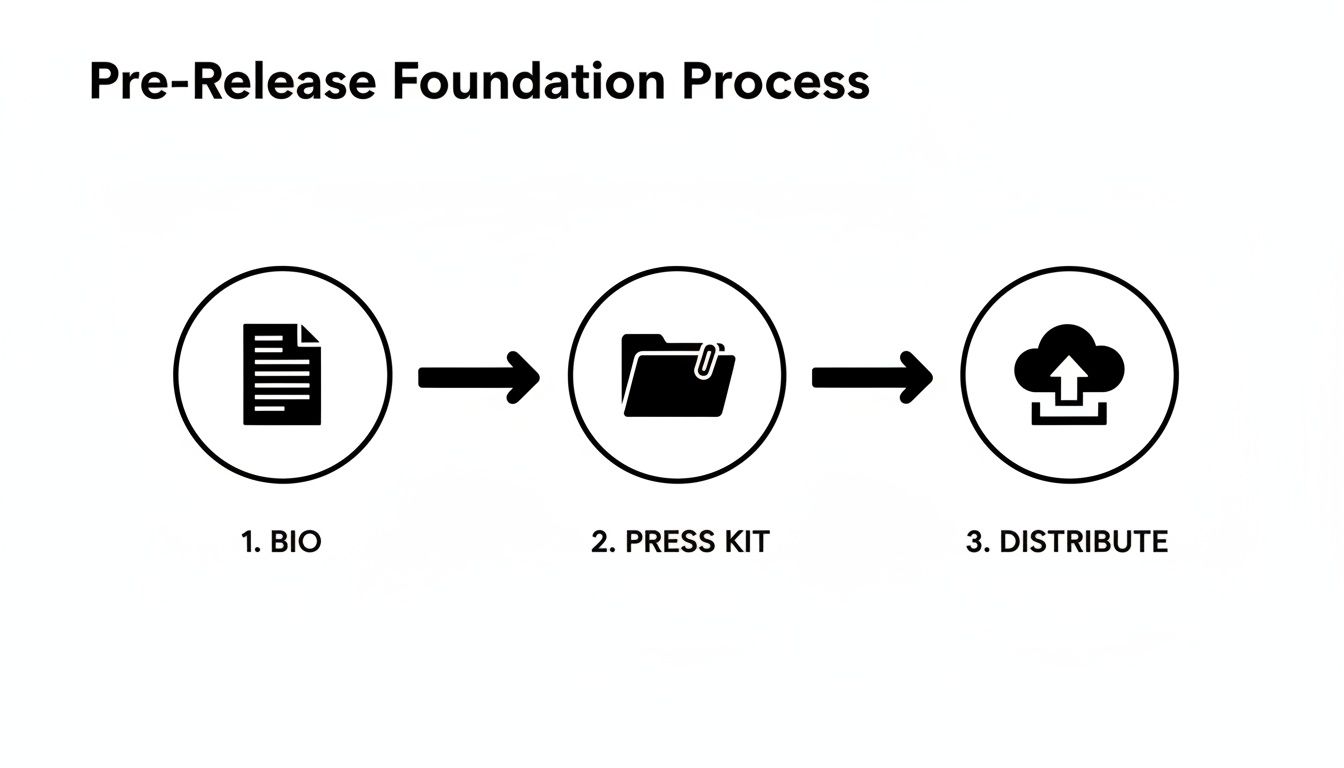
As you can see, having a solid bio, a professional press kit, and getting your music distributed early are the essential building blocks for any successful campaign.
Pitching to Spotify's Official Editors
Your first stop should always be the official submission tool inside your Spotify for Artists account. This is your one and only direct line to the internal team that curates massive playlists like New Music Friday, Lorem, and Chill Hits.
The golden rule here is simple: time. You absolutely must submit your track at least 3-4 weeks before its release date. No exceptions. This gives the editors a fighting chance to actually listen to your song among the tens of thousands they get hit with every single week.
When it's time to write your pitch, make it count.
Genre and Mood: Get specific. Don't just say "Pop." Is it "Indie Pop" or "Dream Pop"? Choose moods and styles that genuinely capture your track's vibe.
The Pitch Description: This is your moment. You've got 500 characters to tell a story. Don't just describe the song—explain the narrative behind it, what your creative process was like, or any cool backstory that makes it unique.
Key Instruments: Listing the main instruments helps editors quickly grasp the sonic texture of your track.
Your editorial pitch isn’t just filling out a form. It's your elevator pitch to the most influential people on the platform. Keep it short, compelling, and authentic to give your music the best shot it deserves.
Finding and Vetting Independent Curators
Beyond Spotify's walls lies the wild west of independent curators. These are the real music lovers—the bloggers, influencers, and die-hard fans who have built loyal followings around very specific niches. Getting on the right independent playlist can honestly be just as powerful as an editorial add.
But this world is filled with both goldmines and landmines. You have to do your homework. Start by searching Spotify for playlists that already feature artists who sound like you. Look for lists with healthy follower counts, but more importantly, look for signs of real engagement. A playlist with 5,000 active, passionate followers is infinitely more valuable than one with 50,000 fake, botted accounts.
Once you have a list of targets, it's time to vet them. Be on the lookout for red flags like generic playlist names, suspicious jumps in follower counts, and curators who promise a placement for a fee without any mention of quality control. Landing on a fake playlist won't just do nothing for you; it can actually hurt your standing with the Spotify algorithm and could even get you in trouble with your distributor. To really get into the weeds on this, check out our guide on how to submit music to Spotify playlists and get heard.
Using Tools to Streamline Your Outreach
Let's be real: manually finding, vetting, and emailing hundreds of curators is a soul-crushing amount of work. This is where dedicated playlist pitching platforms become a lifesaver. They connect artists directly with a network of verified curators, saving you the headache.
Services like SubmitLink were built to solve this exact problem. They use smart matching and a pre-vetted network of curators to take the guesswork out of the equation. You can target playlists by genre and mood, knowing that every curator on the platform is legit. This strategy doesn't just save you a ton of time; it protects you from the scams and fake playlists, making sure your effort and money go toward real, sustainable growth for your music.
How to Spot Scams and Protect Your Music
The promise of landing on a huge playlist is tempting, I get it. But this excitement has created a dark corner of the industry filled with scams. Artists, hungry for a break, are the perfect target for services that promise the moon but deliver nothing but fake streams and a black mark on their reputation. Protecting your music—and your career—means learning to spot these traps before you spend a dime.
These scams play on your ambition. They dangle guaranteed placements and thousands of streams in front of you for what seems like a reasonable fee. The catch? Those streams are coming from bots, not people. This isn't just useless; it's actively damaging.
Why Fake Streams Are So Dangerous
When your song lands on a botted playlist, the fake activity it generates is like poison for your Spotify data. Playlists are incredibly powerful, so the legitimacy of your placements has a direct impact on your career and your income. Spotify's algorithm relies on real human behavior—saves, shares, repeat listens—to figure out what's good and who to show it to. Bots don't do that. They just muddy the waters, confusing the algorithm and stopping your music from ever reaching genuine fans.
And the fallout can be brutal. Distributors like DistroKid and UnitedMasters have gotten incredibly good at spotting fake streams. If they flag your track, you could get a strike against your account or, in a worst-case scenario, they might just pull your music from all platforms. Game over. You can dig deeper into this and discover more about smart playlisting strategies on artist.tools.
"A playlist with 5,000 real, engaged listeners is infinitely more valuable than one with 50,000 bots. Real fans save your music, follow your profile, and buy merch. Bots just poison your data and put your career at risk."
Telltale Signs of a Playlist Scam
So, how do you tell the good opportunities from the bad? The red flags are usually right there in front of you, as long as you know what to look for. It's time to put on your detective hat and investigate every single playlist before you even think about pitching.
Here are the dead giveaways of a fraudulent playlist:
Guaranteed Placements for a Fee: This is the big one. Real curators pick songs based on quality and vibe. Anyone promising a spot in exchange for cash is almost certainly selling bot streams.
Generic Playlist Names: Be skeptical of playlists with bland, keyword-stuffed titles like "Top Hits 2024" or "Viral TikTok Songs." Passionate curators usually come up with more creative and specific names.
Crazy Follower-to-Stream Ratios: Do the math. If a playlist has 100,000 followers but the songs on it are only getting a few hundred streams, something is very wrong. Those followers are fake.
Shady Curator Communication: Scammers often act unprofessionally. Watch out for generic copy-paste emails, zero social media presence, or dodging questions about their audience.
Learning to spot these signs is a non-negotiable skill for any artist today. To really sharpen your scam-detection instincts, check out our complete guide on how to detect fake Spotify playlists and avoid scams.
Protecting Your Investment and Your Music
Your best defense is a good offense. That means being picky about who you work with and using tools that value transparency and real results. The goal isn't just to rack up streams; it's to find actual people who will connect with what you're creating.
To keep your promotional budget and your music safe, make these practices part of your routine:
Vet Every Single Playlist: Before you pitch, do your homework. Dig into the playlist's stats. Check the "About" section on the curator's Spotify profile for contact info and look at the other artists they've featured. Does your music actually fit?
Use Services with Built-In Fraud Detection: Platforms like SubmitLink are backed by serious bot-detection tech. Think of it as a safety net that automatically flags sketchy playlists, making sure your music only gets sent to legitimate, high-quality curators.
Chase Engagement, Not Just Numbers: A spot on a small, niche playlist with a super-active audience is worth more than a placement on a massive, dead one. High save rates and genuine follower growth are the metrics that really matter, not just the raw stream count.
Making smart, informed decisions is what separates a sustainable career from a flash in the pan. By resisting the lure of cheap, guaranteed streams and focusing on authentic promotion, you protect your music, build a real fanbase, and set yourself up for success that actually lasts.
Expanding Your Reach Beyond Playlists
While getting on a big Spotify playlist feels like the ultimate win, experienced artists know it's just one piece of the puzzle. Relying on a single source for new listeners is a massive gamble. The algorithm can change, playlists get refreshed, and all that momentum can vanish overnight.
A truly sustainable music career is built on a diverse promotional ecosystem. It's about creating multiple pathways for fans to discover you, meeting them where they already hang out—scrolling through social media, reading their favorite music blogs, or watching creators they love. This is how you build a real, lasting fanbase.
Get Seen on TikTok and Reels
Short-form video isn't just a trend; it's one of the most powerful music discovery engines on the planet. Forget just posting a slick clip from your music video. The real magic on platforms like TikTok and Instagram Reels happens when you stop selling a song and start telling a story.
Your content needs to be a blend of your music and you. Show people the world your music comes from.
A few ideas that consistently connect with viewers:
Pull Back the Curtain: Share snippets of your songwriting process, a cool moment from a studio session, or even the frustrating parts of making a track. This vulnerability builds a genuine connection.
Soundtrack a Moment: Create a short video that uses your music to capture a funny, emotional, or relatable experience. This gives people a template and encourages them to use your sound in their own videos.
Let Your Personality Shine: Are you a total gearhead? A thrift store fashion expert? A hilarious storyteller? Fans fall in love with artists, not just audio files.
The goal is to make content that feels natural on the platform. When it's authentic and engaging, people don't just hear your sound—they click through to your profile and, ultimately, to your music.
Partner with Content Creators and Influencers
One of the quickest ways to get your music in front of a new, receptive audience is to have a creator they already follow and trust feature it. Think of it as modern-day music placement, and it can be incredibly powerful.
Start by finding creators whose aesthetic and vibe match your music. If you make dreamy, ambient electronic music, you're probably not going to pitch a high-energy comedy account. Instead, look for creators in niches like travel, lifestyle, art, or indie filmmaking who use music to craft a specific mood.
A personalized message goes a long way. When you reach out, explain why your song is a perfect fit for their specific content style. It shows you're a fan of their work, not just another artist spamming their inbox.
Build Credibility with PR and Blog Features
Don't sleep on music blogs and online publications. A feature on a respected blog is a huge stamp of approval. It's the kind of social proof that tells potential fans, industry contacts, and even playlist curators that you're an artist to take seriously.
Your outreach needs to be sharp and targeted. Do your homework. Find the blogs that cover artists in your specific sub-genre and follow their submission guidelines perfectly. A generic mass email is the fastest way to the trash folder. Personalize your pitch and make it dead simple for them to listen. If you're building your list from scratch, exploring some of the best sites to promote your music for independent artists in 2026 is a great place to find outlets actively looking for new talent.
Use Paid Ads to Find Your Superfans
Finally, it's time to stop being afraid of putting a small, strategic budget behind your music. Running targeted ads on platforms like Meta (for Facebook and Instagram) or TikTok can send a stream of highly relevant listeners directly to your Spotify or Apple Music page.
You can set up campaigns to target fans of similar artists, people in specific cities you want to tour, or audiences with interests that align with your brand. The trick is to start small, A/B test your video clips and audiences, and pay close attention to the data. A budget of just $5–$10 per day is often enough to learn what works and start turning casual listeners into loyal fans.
Promotion Channel Comparison
Choosing where to focus your time and money can be tough. Each channel serves a different purpose in your overall strategy. This table breaks down the common options to help you decide what's right for your next release.
Channel | Primary Goal | Typical Budget | Best For |
|---|---|---|---|
TikTok/Reels | Viral Discovery & Sound Usage | $0 – $250+ (for ads) | Building personality, creating trends, reaching a broad audience. |
Influencer Outreach | Targeted Audience Exposure | $0 (contra) – $1,000+ | Tapping into niche communities with high trust and engagement. |
PR/Blog Features | Building Credibility & Authority | $0 – $500+ (for PR) | Gaining industry validation and social proof for your music. |
Paid Social Ads | Driving Direct Traffic to DSPs | $50 – $500+ (per campaign) | Converting awareness into streams, follows, and fan data. |
Ultimately, a mix of these strategies will yield the best results. Start with one or two channels that feel most authentic to you, master them, and then gradually expand your efforts as you grow.
How to Analyze Your Data for Long-Term Growth
The moment your music goes live isn't the finish line; it’s really just the starting block. Every stream, every save, and every share tells a story. Learning to read that story is how you turn a one-off release into a real career, getting your music in front of more of the right people over time.
Think of your Spotify for Artists dashboard as your mission control. It's packed with insights that tell you so much more than a simple stream count. This data is your direct feedback loop from the world, showing you what’s hitting, who it’s hitting with, and where your actual opportunities lie.
Flying blind here is like trying to drive across the country without a map. Sure, you're moving, but are you getting any closer to where you want to go?
Key Metrics That Actually Matter
It’s easy to get mesmerized by big stream numbers, but don’t get bogged down by vanity metrics. You need to focus on the numbers that signal genuine fan connection. These are the stats that tell Spotify's algorithm that your music is worth pushing to more people.
Here’s what you should be zooming in on:
Saves: This is the gold standard. A save means someone actively added your track to their personal library—they want to hear it again and again. It’s a massive signal of long-term value to the algorithm and a true sign of a fan.
Playlist Adds: This tells you which playlists are genuinely driving discovery. Don't just track how many playlists you're on, but which ones deliver engaged listeners. A high stream-to-listener ratio is a great sign.
Listener Demographics: Who’s listening? Where are they? Knowing your top cities and the primary age group of your audience is invaluable. This is exactly what you need to target future social media ads or even map out a tour someday.
Think of your data as a conversation with your audience. A high save rate is them shouting, "We love this!" A sudden spike in listeners from São Paulo is them asking, "When are you coming to Brazil?" You just have to listen back.
Turning Insights into Action
Data is just a pile of numbers until you do something with it. The real magic happens when you connect the dots between your promotional efforts and the results you see in your dashboard. This is how you stop guessing and start building a strategy that actually works.
Let's say you ran a small Instagram ad campaign targeting fans of a similar artist. Jump into your listener data for that specific week. If you see a clear lift in streams and saves, you’ve just found an audience that gets your music. Next time, you can confidently put more budget behind that exact targeting.
Or maybe a placement on an indie "Chill Morning" playlist led to a huge spike in saves. That tells you everything you need to know about the context where your music shines. Use those keywords—"chill," "morning," "focus"—in your next round of playlist pitches. This cycle of analyzing, learning, and tweaking is the engine that drives sustainable growth.
Got Questions? We've Got Answers
You're grinding away, making great music. But when it comes to getting it out there, things can get confusing fast. Here are some of the most common questions I hear from artists just like you.
How Much Should I Actually Budget to Promote a Single?
For most indie artists, a solid starting point is somewhere between $200 and $500 for a single. That's a realistic number that lets you dip your toes into a few key areas, like running a small, targeted social media ad campaign and getting your track onto some quality playlists.
Where you put that money is what matters. My advice? Focus on legitimate playlist pitching first. Good placements can kickstart the streaming algorithms and land you real, engaged followers. Just be wary of anyone promising a set number of streams for a suspiciously low price—that's a huge red flag for bots.
When Is the Right Time to Pitch My Song?
This is a big one. You absolutely need to get your track submitted to Spotify's own editors through your Spotify for Artists dashboard at least 3-4 weeks before your release date. No exceptions. They get thousands of songs every day, so you need that lead time.
For independent playlist curators, the magic window is a little tighter: 1-2 weeks before release day. This keeps your track top-of-mind for them right when they're refreshing their lists, which is usually on Fridays. If you pitch too early, they'll forget about you. Too late, and you miss that crucial day-one momentum.
Think of your release timeline as a runway. Pitching early gives your song the space it needs to build speed and actually take off on release day, rather than just rolling off the end of the pavement.
Should I Go After the Huge Playlists or the Smaller Niche Ones?
I get it, the temptation to land on a massive playlist is real. But for artists on the come-up, the smarter play is almost always targeting smaller, niche playlists. Why? Because the listeners on those lists are actually listening. They're dialed in and way more likely to save your track and follow your profile.
That kind of high-quality engagement is exactly what Spotify's algorithm wants to see. It’s the stuff that gets you noticed and placed on powerful algorithmic playlists like Discover Weekly and Release Radar. That slow, steady burn of organic growth is so much more valuable than a short-lived spike from one big list where your song gets lost in the shuffle.
Ready to connect with real curators and avoid the scams? At SubmitLink, we match your music with a vetted network of playlist creators, backed by the same bot detection trusted by major distributors. Get measurable feedback and find your audience. Start your campaign today on https://submitlink.io.


