.png)
A Modern Guide to Get Your Music Heard by Millions
The days of waiting for a lucky break are over. If you want to get your music heard in today's world, you need a smart, repeatable game plan—not a lottery ticket. Sending out demos and hoping someone important listens? That's a relic of the past.
The New Rules for Getting Your Music Heard
The music industry has been completely rewired. Just throwing your tracks up on streaming services is like printing a thousand flyers and leaving them in your garage. Nobody will ever see them. The real work isn't just making great music anymore; it's about getting that music in front of people where they actually find new artists.
This couldn't be more true than on a platform like Spotify. It's become the main arena for music discovery, boasting over 615 million monthly active users.
But here's the kicker: over 60% of all listening on Spotify comes from playlists and algorithmic recommendations. It's not people searching for you by name. If your music isn't landing on playlists, you're essentially invisible to the vast majority of potential fans.
Sure, the superstars are racking up billions of streams, but the top 1% of artists take home over 75% of all the revenue. For everyone else, it’s a crowded field. This is why a strategic, targeted approach to the playlist ecosystem is the single most important part of your release plan.
Mastering the Modern Music Ecosystem
To make a real impact, you have to shift your thinking. You're not just an artist anymore; you're also a marketer and a data analyst. It's all about understanding how these discovery engines work and making them work for you.
Here's where you need to put your energy:
Algorithmic Triggers: Figure out what actions—like saves, shares, and personal playlist adds—tell the algorithms that your song is a winner and worth showing to more people.
Multi-Platform Presence: Use platforms like TikTok and Instagram for more than just shouting "new music out now!" Create authentic content that pulls people from social media over to your streaming profiles.
Direct Fan Relationships: Build a real community. Start an email list or a Discord server to gather your core supporters who will be ready to stream, share, and hype your music the second it drops.
The goal is to create a self-sustaining loop: a playlist placement introduces you to new listeners, who then follow you on social media, join your mailing list, and signal to the algorithm to show your music to even more people.
Beyond the streaming platforms, think about your overall digital footprint. Learning about proven ways to increase organic traffic to your artist profiles and website can help new fans find you from all corners of the internet. This wider view ensures your efforts build on each other, turning a few initial streams into a long-term, sustainable career in music.
How to Actually Get on Spotify Playlists
Getting your music on Spotify is one thing; getting people to actually listen is another game entirely. When it comes to music discovery on the platform, playlists are king. They are the single most powerful engine for building an audience, but you have to know how to work the system. It’s not about landing one "big break" playlist. A smart strategy means targeting all three types that drive real streams.
The whole process is a cycle. You upload your track, you push it hard through playlists, and you use the data and audience growth from that push to fuel your next release.
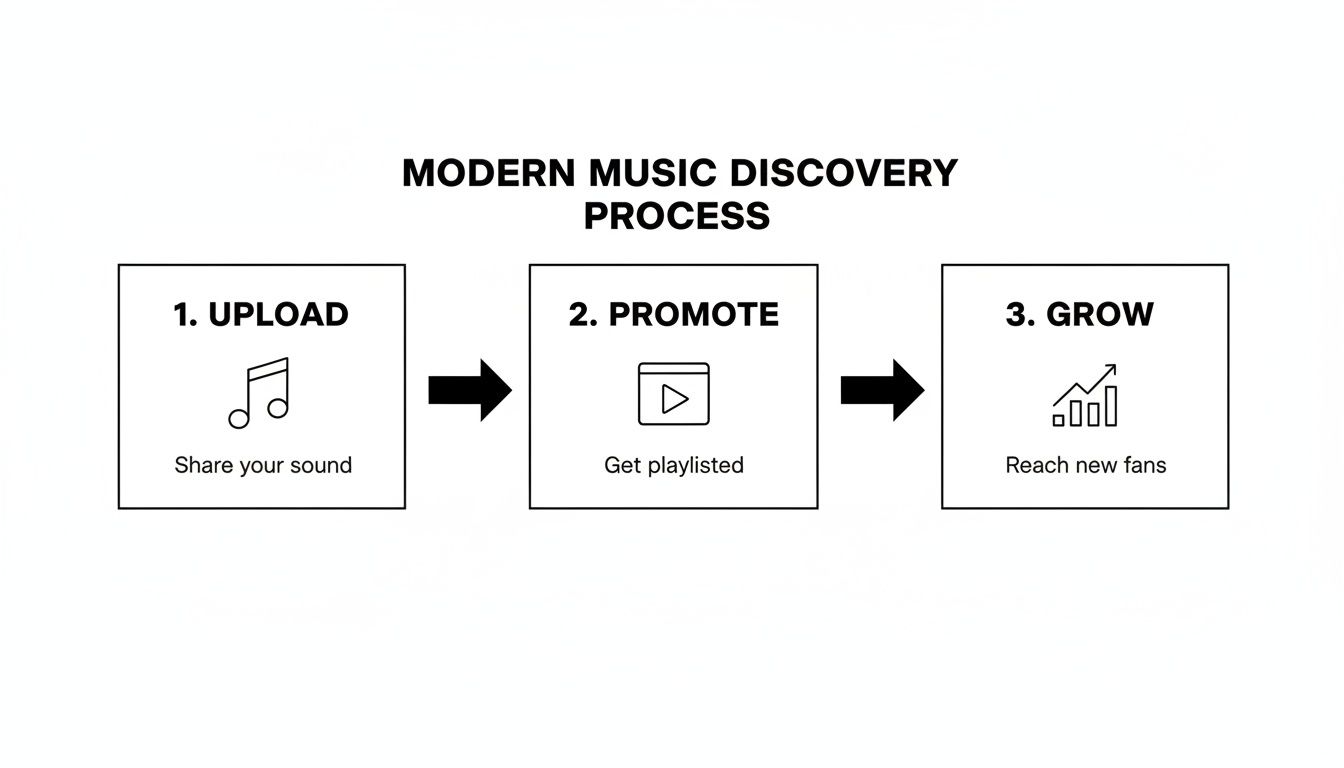
As you can see, promotion isn't some final step you take after the fact. It’s the engine that turns your upload into genuine growth.
Pitching Directly to Spotify Editors
Your first move should always be pitching to Spotify’s own editorial team. This is the only official, direct line you have to land on those massive, human-curated playlists like New Music Friday, Lorem, or the big genre-specific lists. The whole process happens inside your Spotify for Artists dashboard.
Here's the critical part: you absolutely must submit your track for playlist consideration at least seven days before its release date. This isn't a suggestion—it's a hard requirement. Submitting a day or two before your release goes live is the same as not submitting at all. Editors are sifting through thousands of songs a week, and your track needs to be in the queue.
Your pitch is your one shot to tell the story behind your song. Don't just list genres. Talk about the mood, the instruments, the backstory, and any marketing plans you have. Give them a reason to care.
And before you even think about pitching, get your artist profile in order. That means a current bio, professional-looking photos, and all your social media links updated. An incomplete or sloppy profile tells an editor you're not taking this seriously, which is an easy reason for them to pass on your music.
Navigating the World of Independent Curators
Beyond Spotify's official gatekeepers, there's a sprawling ecosystem of independent curators. These are the music bloggers, brands, and dedicated fans who have built their own audiences around specific sounds and genres. Getting a spot on one of their playlists can be just as impactful as an editorial add, often triggering a nice boost from Spotify's algorithm.
But this is also where you need to be extremely careful. The playlist economy has exploded, but it's pretty much the Wild West—totally unregulated. For new artists, third-party playlists feel like the only way to get heard, but the risk is real. Industry trackers estimate there are over 4 billion user-generated playlists on Spotify, but only a tiny fraction have any real, engaged listeners.
With so much competition, shady promotion services have popped up everywhere. Spotify is constantly cracking down on artificial streaming, and if they flag your track, it can be a disaster. Distributors like DistroKid have even warned artists that suspicious activity can lead to having your royalties seized or your entire account shut down. This isn't a risk worth taking.
Vetting Curators and Avoiding Scams
So, how do you find the good curators and sidestep the scams? Learning to spot the fakes is a crucial skill for any indie artist today. A cheap service promising thousands of streams overnight is almost certainly using bots, and that's a quick way to get your music pulled from the platform.
Picking the right promotional partners is crucial. Some tactics are perfectly safe and effective, while others can put your career at risk. Here's a breakdown to help you tell the difference.
Safe vs Risky Playlist Promotion Tactics
Tactic | Potential Risk Level | What to Look For |
|---|---|---|
Direct Editorial Pitching | None | Use the official Spotify for Artists pitch tool at least 7 days before release. |
Vetted Curator Platforms | Low | Look for services like SubmitLink that use bot detection and verify curator authenticity. |
Paid Submission Fees | Low to Medium | Legitimate curators charge for their time to review, not for a guaranteed placement. |
Organic PR Outreach | Low | Pitching to blogs and curators who have editorial standards and a real audience. |
"Guaranteed Placement" Services | High | Any service that guarantees a spot for a fee is likely violating Spotify's terms. |
Pay-Per-Stream Services | Very High | These almost always use bots or click farms, which can get your music removed. |
Playlist Networks with No Vetting | High | Large, open networks where anyone can add a playlist are often full of fraudulent accounts. |
Ultimately, if a deal seems too good to be true—like thousands of streams for $5—it absolutely is. Sticking to legitimate methods protects your music and your reputation.
Here are a few red flags to watch out for:
Pay-for-placement guarantees: Real curators get paid for their time and effort to review music, not for a guaranteed spot on a list. Anyone who promises a placement in exchange for cash is violating Spotify's terms of service and can't be trusted.
Vague playlist names: Be wary of playlists with generic names like "Top Hits 2024" that are filled with unknown artists. It’s often a sign of a fake list.
Suspicious follower growth: You can use analytics tools to check a playlist's history. If you see a sudden, massive jump in followers overnight, they were probably bought.
This is why platforms like SubmitLink have become so essential for artists. By using the same bot-detection systems trusted by major distributors, it weeds out the fraudulent playlists before you even waste your time or money. It turns your outreach from a high-stakes gamble into a measurable, safe part of your release strategy. For a deeper dive, our guide offers more proven strategies for getting on Spotify playlists to help you build a campaign that actually works.
Leveraging Algorithmic Playlists
Finally, there are the algorithmic playlists—the secret sauce of Spotify. You can't pitch directly to lists like Discover Weekly or Release Radar, but you can absolutely influence them. These playlists are personalized for every single listener and are pure gold for reaching new fans who are likely to love your music.
The algorithm is watching. It pays close attention to how listeners engage with your track in the first 24-48 hours after it drops. Every save, every share, and every time someone adds your song to their own personal playlist, it sends a powerful signal to Spotify. This is precisely why it’s so important to rally your existing fans on release day. Get them to stream and save your track early. That initial burst of positive data is what convinces the algorithm to start pushing your music out to a much wider audience.
Building an Audience Beyond Spotify
Getting your track on a big playlist feels like a massive win, and it is. But it's just the first play in a much longer game. A playlist can put your music in front of thousands of new ears, but what happens tomorrow when the algorithm serves up something else? To really get your music heard and build a career that lasts, you have to turn those fleeting listens into genuine, long-term fans.
It’s all about creating a connected world for your music. You're building pathways so a listener doesn't just stay a listener.
Think about the fan journey. Someone might hear you on a Spotify playlist, get curious, and find your Instagram. There, they see your behind-the-scenes content, which leads them to join your Discord for exclusives. A few months later, they're buying a t-shirt or a ticket to your show. Each step pulls them in deeper, transforming them from a passive listener into a true supporter.
Master Short-Form Video on TikTok and Instagram
If you’re not using platforms like TikTok and Instagram Reels, you’re leaving a huge audience on the table. But here’s the thing: it’s not about hopping on the latest dance trend or just posting your album art with a song snippet. The real magic is in storytelling and creating authentic moments that make people curious about the person behind the sound.
Treat these platforms like a visual diary of your musical life. Don't just command people to "stream my new song"—show them why they should care.
Share the Story: Got a lyric that hits hard? Post a 15-second clip explaining the real-life event that inspired it. That's content people connect with.
Show Your Process: Film the messy parts. A clip of you fumbling a guitar riff or the raw emotion of finally nailing a vocal take makes your art feel real and relatable.
Create Your Own Trend: Forget using someone else's trending audio. Start your own. Ask your followers to use your song to soundtrack a specific moment, like "show me your weekend adventure using this sound."
The goal is to provide value or an emotional hook, not just a sales pitch. When you get this right, people will naturally travel from your video to your profile, and from there to your Spotify. That's how you convert passive scrolling into active listening.
Own Your Audience with Email and Community
Let's be real: you don't own your followers on social media. You're just renting them from the algorithm. When that algorithm changes (and it always does), your reach can plummet overnight. The only audience you truly control is the one you can contact directly. That’s why your email list and community hubs like Discord are your most valuable assets.
An email list is a direct line to your most passionate fans. It's your personal space to share news, offer pre-sales on merch and tickets, and tell the stories that don't fit into a 280-character tweet.
A single email subscriber is worth more than a dozen social media followers. They’ve actively invited you into their inbox, which is a powerful signal of their commitment to you and your music.
If you’re serious about building a direct relationship with your fans, learning some solid strategies for building a high-converting email list is one of the smartest things you can do. A great starting point is to offer something valuable—like an unreleased demo or a PDF of your lyrics—in exchange for an email address on your website.
Create a Hub for Your Superfans
Email is perfect for big announcements, but for day-to-day interaction, nothing beats a dedicated community on a platform like Discord or Telegram. This is where you can truly cultivate a tight-knit group of superfans.
Think about what you could do with a space like that:
Get Instant Feedback: Share rough demos and ask your biggest supporters for their thoughts before a song is even close to finished.
Organize Listening Parties: On release night, host a live session where you all listen to the new track together for the first time.
Mobilize Your Core Supporters: When a new single drops, you can go straight to your Discord and ask your community to save and share it. This creates that crucial first wave of engagement that the Spotify algorithm absolutely loves.
Building this kind of multi-platform presence is work, no doubt. But it creates a resilient foundation for your music career. Spotify is a fantastic tool for discovery, but by using social content and direct communication, you ensure you're not just renting an audience—you're building your own. This broader approach, which can also involve getting placement on the best sites to promote music for independent artists, is how you turn a single stream into a lifelong fan.
Getting Press and Radio Plays Without a PR Team
Playlists are king, but don't sleep on the old-school cool of blogs, online magazines, and indie radio. Landing a feature here gives your music a different kind of credibility. It shows you’re being taken seriously by tastemakers and dedicated music fans—the kind of people who actually read about new artists.
And the best part? You don't need a publicist with a massive retainer to make it happen.
The secret is all in the approach. Sending a generic email blast to a hundred blogs is the fastest way to get your message deleted. Your real mission is to build genuine connections, one person at a time. It’s about proving you've done your homework and actually respect the work of the writer or DJ you’re pitching.
This means you need to get surgical. Find the exact people who cover music like yours and craft a pitch that feels like it was written just for them. That’s how a cold email becomes a warm introduction.
Building Your Media Hit List
Before you even think about writing a pitch, you need to know who you’re talking to. Your first job is to build a hyper-targeted list of blogs, online radio shows, and even YouTube channels that are a perfect match for your sound.
Don't just Google "music blogs." Get way more specific.
Try searching for phrases like "dream pop music blog" or "lo-fi hip-hop radio show." A great tactic is to look at artists who are a step or two ahead of you in a similar genre. Where are they getting coverage? Who reviewed their last single? Which blogs have interviewed them? This is your treasure map.
For every potential outlet you find, you need to dig for a few key details:
The Right Person: Hunt for the name of a specific writer, editor, or show host. An email to "Tricia" is infinitely better than one sent to a generic "info@" or "submissions@" address.
Their Submission Policy: Most legit publications have clear guidelines on how they want to receive music. Find them and follow every single instruction to the letter. This is your first test.
A Personal Connection Point: Find a recent article they wrote or a song they featured that you genuinely like. Make a note of it. This little detail is your secret weapon for the pitch.
Your goal isn't to build the biggest list, but the best list. Fifty well-researched contacts who are a perfect fit for your music are way more valuable than a list of 500 random blogs.
Crafting the Perfect Pitch Email
Your email is your one shot to make an impression. You have about five seconds to get their attention before they move on. Music writers are drowning in hundreds of these emails every single week, so yours has to be sharp, personal, and incredibly easy to deal with.
Here’s a simple structure that I’ve seen work time and time again:
Subject: Keep it clean and informative. Something like "Music Submission: [Your Artist Name] - [Song Title]" is a good start. If you can honestly add a comparison, even better: "(for fans of Tame Impala, Khruangbin)."
Body:
Open with the personal touch. Start by referencing that article or review you found earlier. "Hey Tricia, I really loved your write-up on the new St. Vincent track..." This immediately shows you're not a spam bot.
Get straight to the point. In one or two sentences, describe your sound and maybe a quick, interesting fact about the song. No long, flowery bios.
Make it easy to listen. Provide one private streaming link. A link to a private SoundCloud playlist or Dropbox folder is perfect. Whatever you do, do not attach MP3 files.
Include your EPK. End with a single link to your Electronic Press Kit (EPK), where they can find your bio, high-res photos, and social links if they want to dig deeper.
Keep the entire email to just a few short paragraphs. Respect their time above all else.
The Art of the Follow-Up
Okay, you hit send. Now what? The follow-up is a delicate dance. You want to be persistent, but you absolutely cannot be annoying.
A single, polite follow-up about a week after your initial pitch is totally fine. It’s often genuinely helpful.
Just reply directly to your original email with something short and sweet. "Hey, just wanted to gently bump this in your inbox in case it got buried. Hope you get a chance to check out the track!"
And that's it. After that one follow-up, the ball is in their court. If they’re interested, you’ll hear from them. Pestering them any further will burn that bridge for good. Remember, building relationships in the media is a long game. Play it cool.
Turning Your Streams into a Real Career
Getting heard is just the start. The real goal? Building a career you can actually live on. Playlist adds and a viral TikTok are great, but they're just moments. You have to make them mean something more. This is where you connect the buzz from your promo efforts to real, tangible growth and, yes, actually making a living from your music.
Those streams and follower counts aren't just for bragging rights. They’re data points telling you exactly what your next move should be.
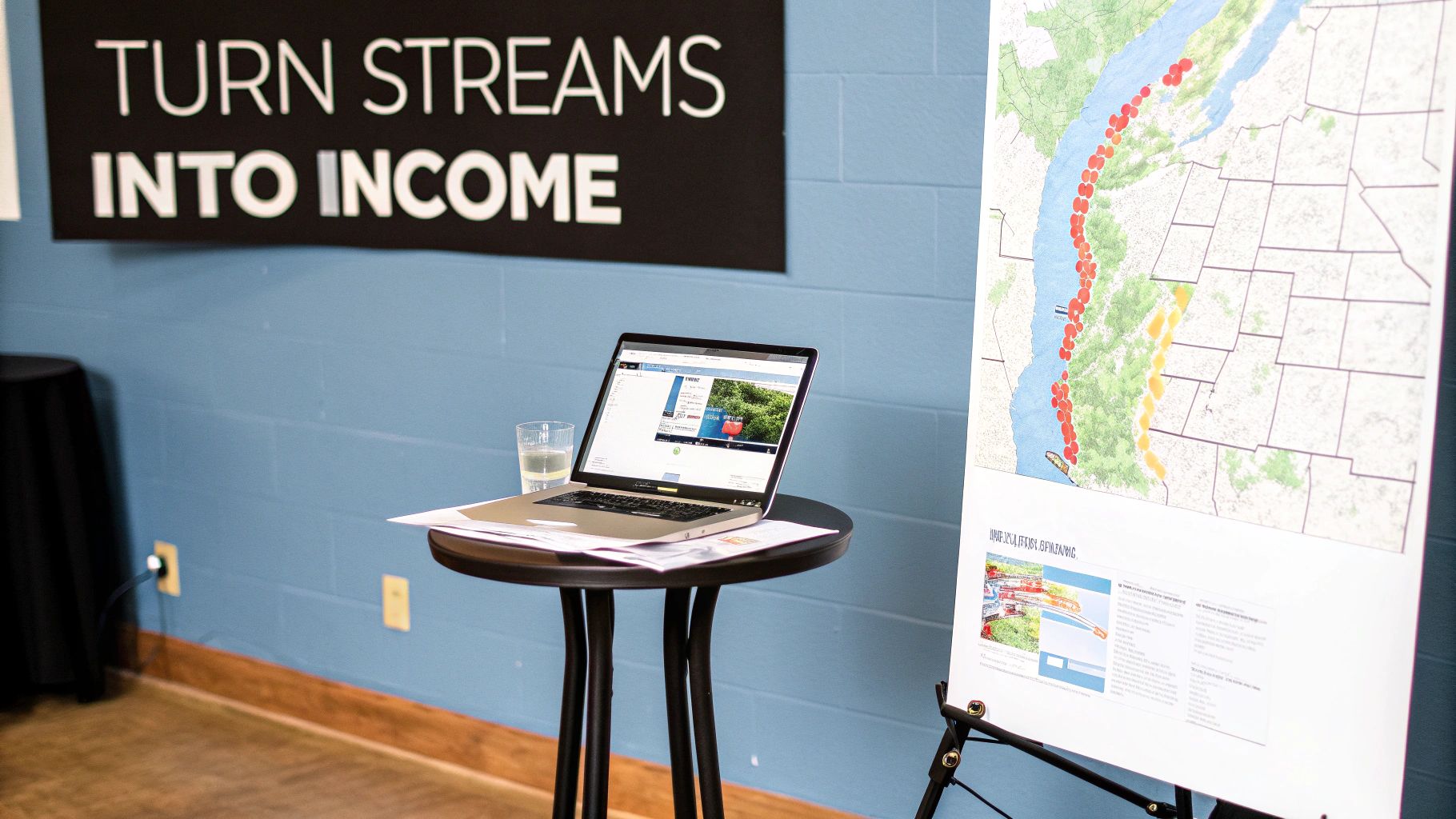
It's all about playing the long game—turning passive listeners into a genuine community that can sustain you. This is where you stop being just an artist and start thinking like an entrepreneur.
From Streaming Data to Live Shows
Your Spotify for Artists dashboard is basically a treasure map, if you know how to read it. Pop open the "Audience" tab, and you'll see exactly which cities are listening to your music the most. This isn't just cool trivia; it's a ready-made road map for booking shows that won't be empty.
Stop guessing where you should play. The data has the answer.
See a random spike in listeners in Austin? Or maybe Manchester? That’s your signal. Start reaching out to small venues, bookers, or local promoters in that specific city with the numbers to back it up.
Think about it: an email that says, "Hey, I have 2,500 monthly listeners in your city and I'd love to book a show," is a world away from a generic "please give me a gig" message. This helps you book smarter, avoid playing to an empty room, and start building a real-world fanbase where your digital one is already popping off.
Your streaming analytics are your best booking agent. Use the data to pinpoint fan hotspots and plan tours that actually make sense, both financially and logistically.
This works whether you're trying to book your first coffee shop gig or planning a small regional tour. Data takes the guesswork out of the equation.
Diversifying Your Income Streams
Look, trying to build a career on streaming royalties alone is a brutal, uphill battle. For most indie artists, it’s just not realistic. The key to making this whole thing sustainable is to build multiple streams of income that all feed into your music.
Your songs are the heart of your business, but they can power so much more.
Let’s think beyond the stream. Here are a few no-brainers:
Merchandise: T-shirts, vinyl, hats, posters—this stuff is more than just product. It's a physical connection. It lets fans show their support in a tangible way. You don't need a huge upfront investment, either. Start with one great t-shirt design using a print-on-demand service.
Sync Licensing: Getting your music into a TV show, film, video game, or ad can be a game-changer. One placement can bring in more than millions of streams. A pro tip? Always have high-quality instrumental versions of your tracks ready to go. Music supervisors love them.
Fan Funding: Your biggest fans want to support you more directly. Platforms like Patreon or the subscription features on Bandcamp let them do just that. They can chip in a few bucks a month in exchange for exclusive content, early access, or a peek behind the curtain.
Each of these gives your audience another way to support the art they love. You're not just asking for money; you're giving them more ways to be part of your journey.
Your 90-Day Release Promotion Checklist
To make all of this happen, you need a plan. A successful release doesn't just fall out of the sky—it's the result of smart, coordinated moves you make for weeks before and after your music drops. This timeline-based checklist helps make sure nothing slips through the cracks.
A solid plan turns a chaotic release into a manageable campaign. Following a timeline like this gives your music the best shot at finding its audience and building a foundation for whatever comes next.
Your 90-Day Release Promotion Checklist
Timeframe | Key Action | Platform/Tool |
|---|---|---|
60 Days Before | Finalize master, create artwork, and develop your release story. | Your DAW, Canva |
30 Days Before | Upload to your distributor and submit to Spotify editorial playlists. | DistroKid, Spotify for Artists |
14 Days Before | Begin pitching to targeted blogs and independent playlist curators. | Email, SubmitLink |
7 Days Before | Start teasing the release on social media with clips and artwork. | TikTok, Instagram Reels |
Release Day | Announce the release and rally your core fans to stream and save. | Email List, Discord |
7 Days After | Analyze initial streaming data and follow up with media contacts. | Spotify for Artists, Email |
30 Days After | Share positive press/playlist adds and plan your next move. | Social Media, Your Calendar |
By laying out your efforts strategically, you stop hoping for the best and start making your own luck. This is how you build a real career, one release at a time.
Got Questions? Let's Talk Music Promo
Even with the best playbook in hand, you're going to hit snags. The world of music promotion is constantly shifting, and it's easy to feel like you're just spinning your wheels. Let's tackle some of the most common questions and roadblocks I see artists face every day.
Think of this as a straight-to-the-point chat about the tricky stuff. No fluff, just direct answers to help you get unstuck and back to making moves.
So, How Much Should I Actually Budget for Promotion?
This is always the first question, and thankfully, you don't need a major-label budget to make some noise. There's no magic number, but a great place to start is simply reinvesting a chunk of whatever you're making from music back into marketing. For a brand new artist, even $100 to $300 for a single release can get you some serious traction if you spend it right.
Here’s one way you could slice up that kind of budget:
Playlist Pitching: Put $50-$150 toward a reputable curator platform. This gets your track in front of dozens of real people who run legitimate playlists, which is far more efficient than cold-emailing all day.
Social Media Ads: Use $50-$100 for a targeted Instagram or TikTok ad campaign. The goal here is simple: drive people directly to your Spotify or Apple Music profile during that crucial first week.
Content Creation: Keep $50 in your back pocket for the little things. Maybe it’s a simple visualizer for YouTube or a Canva Pro subscription to make your social graphics look slick.
It’s not about how much you spend, it's about how smart you spend it. A small, focused budget always beats a big, scattered one.
Don't ever let someone convince you that you need to drop thousands of dollars to get noticed. Start small, be strategic, and scale up as you grow.
What Does Success Even Look Like These Days?
Let’s be real: success in the streaming era is a completely different beast. Forget the old-school dream of gold records and overnight stardom. Today, it’s all about building a sustainable career through slow, steady, and measurable growth. It's a marathon, not a sprint.
For an independent artist, success is about hitting those smaller milestones that prove you're on the right track.
Playlist Momentum: Your first placement on a small but genuinely engaged independent playlist. That's a huge win.
Algorithmic Triggers: The incredible feeling of seeing your track land on an algorithmic playlist like Spotify's Release Radar or Discover Weekly. This means the platform's AI sees people are digging your music.
Audience Growth: Hitting your first 1,000 monthly listeners, and then watching that number climb to 10,000.
Community Engagement: That moment when a handful of real fans slide into your DMs or pop into your Discord asking when the next song is coming. That's pure gold.
These are the victories that matter. Each one is a sign that your strategy is connecting and you're building a real audience.
Are Playlist Promotion Services a Scam?
This is a big one, and the honest answer is: some are, but many aren't. You just have to know what to look for. The playlisting world has its fair share of shady operators, but there are plenty of valuable partners, too.
The single biggest red flag is any service that guarantees a specific number of streams or placements for a flat fee. This is the calling card of a bot farm. They'll flood your track with fake plays, which can get your music pulled from Spotify and could even get you banned from your distributor. It's just not worth the risk.
Legitimate, safe platforms connect you with real, human curators who make their own decisions about what to add. You're paying for the service of getting your music heard by the right people, not for a fake outcome. To keep yourself safe, stick with services that are totally transparent about their curators and have powerful bot detection. If you want to go deeper, learning more about avoiding fake playlists and the risks they pose is a great way to build a promotional strategy that's both effective and safe for your career.
Ready to connect with real curators and get your music heard without the risk? SubmitLink offers a vetted network of hundreds of playlist curators backed by industry-leading bot detection. Start your campaign today and get your tracks in front of real listeners. Find your perfect playlist on submitlink.io.


