.png)
Submit music to playlists: unlock higher streams now
- Jan 14
- 16 min read
Getting your music onto playlists is, without a doubt, the single most powerful way for an independent artist to cut through the noise. It’s no longer about waiting to be discovered; it’s about strategically placing your music directly in the ears of potential new fans by pitching to the right curators—whether they’re editors at Spotify, algorithms, or passionate music lovers.
Why Playlists Are Your Ticket to Being Discovered
Let this sink in: more than 100,000 new songs hit Spotify every single day. The days of uploading a track and hoping for the best are long gone. In today's streaming world, playlists are the new radio, serving as the main discovery engine for millions of listeners. For any artist trying to build a career, learning how to pitch your music effectively isn't just a good idea—it's essential.
Think of it like this: your goal is to start a ripple in a massive ocean of music. Playlists are the stone you throw to make it happen.
The Three Tiers of Playlist Power
Not all playlists carry the same weight, and knowing the difference is key to building real momentum. They each play a unique role and often work together, creating a domino effect that can take a song from unknown to a breakout hit.
User-Curated Playlists: This is your starting point. These playlists are built by everyday music fans, bloggers, influencers, and brands. They're the most accessible and are absolutely critical for getting those first streams, saves, and shares that tell the algorithms your song is worth paying attention to.
Algorithmic Playlists: You've seen these before—Discover Weekly and Release Radar are the big ones. Spotify's algorithms are constantly watching how people interact with music. When your track does well on user-curated lists, it feeds the algorithm the exact data it needs to start recommending your music to a wider, highly targeted audience.
Editorial Playlists: This is the big league. Playlists like Today's Top Hits or RapCaviar are curated by Spotify's own editorial team. Landing one of these can change an artist's career overnight, but it’s almost always the final destination of a journey that started with smaller, strategic placements.
From Small Streams to a Tidal Wave
You don't just land on a massive editorial playlist out of nowhere. The path almost always starts with targeted submissions to smaller, niche playlists that perfectly fit your sound and style.
When your song connects with the listeners on a playlist like "Chill Lofi Beats" or "Indie Rock Workout," their engagement—saves, playlist adds, repeat listens—sends a powerful message to Spotify's algorithms.
A single placement on a well-curated indie playlist can trigger a chain reaction. Listeners save your track, Spotify's algorithm takes note, and suddenly your song appears in Discover Weekly, exposing it to thousands of new potential fans who are primed to love your sound.
This ripple effect is the foundation of a smart promotion strategy. Every placement builds on the last, creating the data and social proof you need to unlock bigger opportunities. And this isn't limited to just one platform; YouTube offers a huge audience through its own ecosystem. Getting a handle on how YouTube playlists work is another crucial piece of the puzzle.
Ultimately, this process changes your role from someone who just makes music to someone who actively builds momentum and forges their own path to getting heard.
Getting Your House in Order Before You Pitch
Before you fire off a single email or fill out a submission form, you need to step back and look at the whole picture. Curators are absolutely bombarded with new music every single day. They’re not just listening to your song; they’re sizing you up as an artist. A polished, professional foundation is what separates you from the noise and signals that you’re serious about your craft.
This isn’t about faking it or changing your artistic identity. It’s about presenting your music in the best possible light and making it incredibly easy for a busy curator to hit "add to playlist." Think of it this way: you wouldn't invite guests over for a dinner party with a messy house. You clean up first.
Nail the Sonic Essentials
This is the absolute, 100% non-negotiable starting point. Your track has to sound incredible. A brilliant song can get an instant "no" if the production quality isn't there.
Professional Mixing and Mastering: Your track needs to stand up against every other song on that playlist, from major label hits to indie darlings. A pro mix gives your song clarity and punch, while mastering gives it that final commercial polish and loudness.
Why It Matters: Sending an unmastered demo is like showing up to a job interview in your pajamas. It immediately tells the curator you're not fully invested in your own project, so why should they be?
A clean, professional sound is your ticket to the game. Without it, the best pitch in the world won’t matter.
Optimize Your Digital Storefront
So, a curator likes your track. What’s the first thing they do? They Google you. They look you up on Spotify. Your online presence is your artist resume, and it needs to be sharp. Your Spotify for Artists profile is ground zero.
Make sure your profile is fully dialed in. We're talking:
A Killer Bio: This is your elevator pitch. Tell your story. What makes your project unique? Keep it tight and engaging—give them a reason to connect with you beyond just a single song.
High-Res Photos: First impressions are everything. Use professional, high-quality images for your profile picture and header. Your visual brand matters.
Up-to-Date Links: Make sure your links to Instagram, TikTok, your website, or anywhere else you live online are working. Curators often peek at your social media to see if you have an engaged audience.
Building a solid foundation goes hand-in-hand with developing your artistic identity. It's more than just the music; it's about understanding and communicating your unique value, which is a key part of learning how to create a compelling personal brand.
Your entire online presence should tell one cohesive story. From your Spotify bio to your latest TikTok, every element should reinforce who you are as an artist. It makes a curator’s decision to support you a no-brainer.
Get Your Backend in Order
This is the boring-but-critical stuff that so many artists skip. Before you send your music anywhere, double-check that all your metadata is correct with your distributor (like DistroKid or TuneCore).
Here’s your quick pre-flight checklist for metadata:
ISRC Codes: Every track needs its own unique ISRC code—it’s like a digital fingerprint. Make sure it's properly assigned.
Publisher Info: Are your songwriter splits, publisher details, and other rights info correct? Get this right now to avoid royalty headaches later.
Clean Track Titles: Don't put "feat." or "remix" in the actual title field. Your distributor has dedicated fields for that. Use them.
Getting this right shows you’re not just a creative, but a professional who understands the music business. It prevents problems down the road and makes you look like you have your act together. Once this foundation is set, you can explore even more promotional avenues, like those covered in our guide on the 12 best sites for music promotion to grow your audience.
Finding Curators Who Will Actually Listen
Alright, so your track is mixed, your profile is sharp, and you're ready to get your music out there. Now comes the real work: finding the right people who will actually listen. This is where your strategy shifts from preparation to outreach, and it's make-or-break. The success of your entire campaign to submit music to playlists hangs on getting your song in front of curators who not only vibe with your genre but are actively looking for new artists just like you.
Let's be real, the music world is crowded. We're talking about 696 million listeners and a mind-boggling 1.6 trillion tracks streamed in just the first half of 2025. Standing out feels impossible without a plan. Playlists are that plan. Believe it or not, 65% of all Spotify streams come from playlists—a mix of the big editorial ones, those powerful algorithmic lists like Discover Weekly, and the independent, user-curated gems that are your golden ticket. For any DIY artist using a distributor like DistroKid or UnitedMasters, this isn't just a statistic; it’s your path from obscurity to actual growth. If you want to dive deeper into the numbers, this breakdown of Spotify pitching services is a great read.
This is exactly why getting your foundation right before you even think about hitting "send" is so critical.
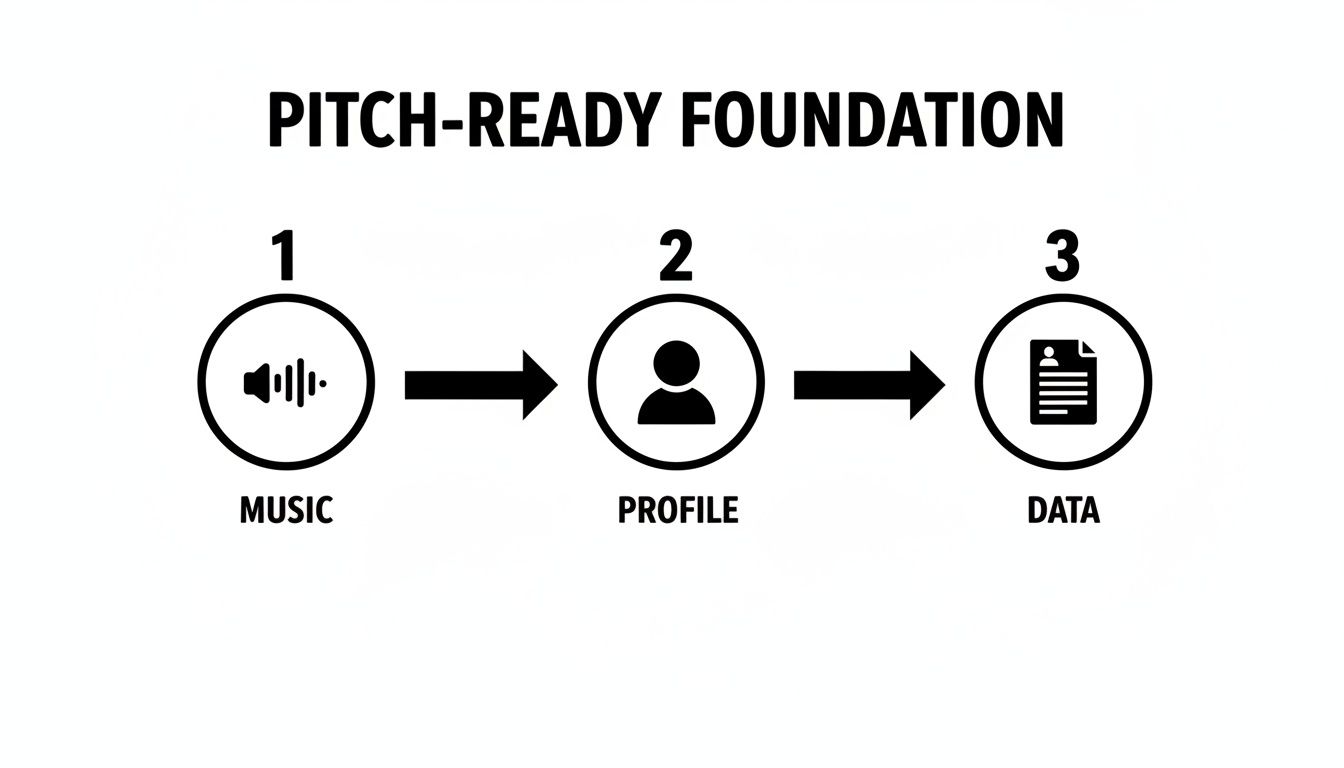
Think of it as a chain: a professionally produced track, a complete artist profile, and accurate backend data. If one link is weak, the whole thing falls apart in the eyes of a curator.
Manual Research vs. Platform Efficiency
So, how do you find these curators? You've got two main routes: the old-school manual grind or using a platform built for the job. Both can work, but they offer wildly different returns on your time.
Manual research means you're the detective. You'll spend hours sifting through Spotify, finding playlists that fit your sound, then hopping over to social media to hunt down the curator's contact info buried in a bio or on a website. It’s a ton of work and often feels like searching for a needle in a digital haystack. It’s free, sure, but is your time better spent making more music? Almost always, yes.
This is where platforms like SubmitLink completely change the game. They act as a bridge, connecting you straight to a network of real, vetted curators. Instead of spending your week hunting for emails, you can filter playlists by genre, mood, and even listener data to make sure your music lands in the right inbox. You can get a feel for the kind of detail available by exploring this community of World music curators.
Think of it this way: manual research is like going door-to-door, hoping someone is home. Using a platform is like having a list of pre-qualified leads who are already expecting your call.
How to Spot and Avoid Fake Playlists
Now for the not-so-fun part: the dark side of playlisting. The space is filled with fake, bot-driven playlists that promise thousands of streams but deliver nothing but empty numbers from server farms. Falling for this can get your music flagged by Spotify, potentially leading to a takedown or even a strike against your account from your distributor. It's a serious risk.
Protecting your music means learning how to be a smart gatekeeper. You have to scrutinize every single playlist before you submit.
To help you out, I've put together a quick guide on the most common red flags.
Red Flags of a Fake Spotify Playlist
This table is your quick reference for spotting fraudulent playlists and keeping your music safe from bot activity.
Red Flag | Why It's a Problem | How to Verify |
|---|---|---|
Suspicious Follower-to-Stream Ratio | A playlist with 50,000 followers but songs barely breaking 1,000 plays means the followers aren't real listeners. Bots don't stream consistently. | Use a third-party tool like Chartmetric to analyze the playlist's historical data and listener engagement. The numbers should make sense. |
Generic Branding | Vague names like "Top Hits 2025" or "Global Pop Now" are often used to mimic popular playlists and trick artists. | Look for a unique brand identity, a niche focus, or a specific aesthetic. Authentic curators are proud of what they've built. |
No Curator Presence | If you can't find a social media profile, website, or any info about the person behind the list, it's highly suspicious. | A real curator usually has a public presence. Do a quick search for their name or the playlist brand on Instagram, Twitter, or Google. |
"Pay for Placement" DMs | Unsolicited DMs offering a guaranteed spot for a fee are almost always a scam. Legitimate curators don't operate this way. | Legitimate platforms may charge a submission fee for their time to review your song, but they never guarantee placement for cash. |
Remember, learning to spot these fakes is a non-negotiable part of your workflow. Platforms like SubmitLink help by integrating bot detection systems (like the one trusted by DistroKid and UnitedMasters) to flag these risky playlists for you. This kind of built-in protection is incredibly valuable and ensures your streams come from real, engaged listeners who might just become your next biggest fans.
Crafting a Pitch That Curators Can't Ignore
Even a world-class song can get deleted in a heartbeat if the pitch is lazy, generic, or demanding. Let's be real: a playlist curator’s inbox is a battlefield. It's overflowing with unread messages and forgotten links. To cut through that noise, you need more than just a great track—you need a pitch that connects on a human level, proves you’ve done your homework, and makes the curator genuinely want to listen.
Forget about those mass-emailed, copy-paste templates that scream, "I didn't even bother to learn your name." The goal here is to stop thinking of this as a simple request ("please add my song") and start seeing it as the beginning of a professional relationship. Your pitch is your one shot at a first impression, and it needs to be just as thoughtfully crafted as your music.
The Anatomy of a Winning Pitch
A killer pitch has a clear, logical flow. It's not an essay; it's a quick, punchy message designed to respect a curator's time while showing them exactly what your music brings to the table.
Think of your message in three quick parts:
The Hook: A personalized opener that proves you're a human, not a bot.
The Story: A short, passionate description of your track and why it's a perfect fit for their playlist.
The Ask: A clean, simple call to action with one easy-to-click link.
Framing it this way keeps you focused and prevents you from rambling. A curator might only give your email a five-second scan, so clarity is everything.
Personalization Isn't a Suggestion—It's a Requirement
If you take one thing away from this, let it be this: personalization is the most critical element of your entire outreach. A generic "Hey curator" is a one-way ticket to the trash folder. You have to prove you’ve actually listened to and appreciate what they've built.
Mention the Playlist by Name: It sounds obvious, but you'd be shocked how many artists forget this. Always start by naming the specific playlist you're pitching.
Reference a Specific Song: This is where you really stand out. Mention a track from their playlist you genuinely love. Something like, "I've had 'Sunset Drive' by City Lights on repeat from your Midnight Chill playlist all week."
Connect the Dots: Now, bridge the gap between their playlist and your track. Tell them why your song belongs there. Does it share a similar vibe, instrumentation, or lyrical theme with other songs they've chosen?
This kind of detail shows you're a thoughtful artist who values their work, not just another spammer blasting out emails.
A great pitch feels less like an ad and more like a recommendation from a fellow music lover. You’re not just begging for a spot; you're suggesting a track you honestly believe will make their playlist even better for their listeners.
How to Talk About Your Music
Once you've made that personal connection, it's time to introduce your song. Ditch the boring descriptions like "it's a pop song with a good beat." You need to use vivid, evocative language to sell the mood and paint a picture.
Instead of saying: "It’s a sad indie folk song."
Try this: "It’s a sparse, melancholic track built around fingerpicked acoustic guitar and haunting vocal harmonies—perfect for a rainy afternoon drive."
See the difference? This gives the curator a clear sense of the song's entire atmosphere before they've even pressed play. It's also helpful to mention a couple of well-known artists as a quick reference point (e.g., "for fans of Bon Iver and Phoebe Bridgers"). It’s a super effective shorthand for your sound. For even more inspiration, check out these excellent pitching examples for every music genre to see how it's done.
The Unwritten Rules: Timing and Etiquette
How you deliver the pitch matters just as much as what you write. Respecting a curator’s process is fundamental to building goodwill and actually getting heard.
What to Do:
Keep it brief. Aim for 3-4 short paragraphs, maximum.
Provide one streaming link. A Spotify link is the industry standard. Never attach MP3 files.
Use a clear subject line. Something like: "Submission: [Your Artist Name] - [Your Song Title] for [Playlist Name]."
Be a good human. A simple "thank you for your time and consideration" goes a long, long way.
What to Avoid:
The dreaded mass email. BCC'ing a list of curators is the fastest way to get blacklisted.
Aggressive follow-ups. A single, polite follow-up after a week is okay if they don't have a "no follow-up" policy. Anything more is just annoying.
Entitlement. You're asking for consideration, not making a demand. Stay humble.
Sending demos. Always pitch a fully mixed and mastered track. Present your best work, every time.
By mastering the art of the pitch, you can transform the grind of trying to submit music to playlists from a frustrating numbers game into a powerful relationship-building tool. Every personalized email you send is a seed planted for your future network.
Tracking Your Campaign and Measuring What Matters

Hitting "send" on your pitches isn't the finish line—it's the starting gun. The real work begins the moment your outreach is out in the world. This is where you shift from being a hopeful artist to a data-savvy strategist, turning every bit of feedback (even silence) into fuel for your next move.
Without some way to track your efforts, you're just flying blind. You won’t know who responded, which playlists actually drove real engagement, or which pitches fell totally flat. A simple spreadsheet or the dashboard in a tool like SubmitLink is all you need to start making sense of the chaos.
This organization is so important because every single interaction is a data point. A "yes," a "no," or no reply at all tells you something valuable about your targeting and your pitch.
Key Metrics to Watch in Spotify for Artists
Once you finally land a placement, your Spotify for Artists dashboard is your new mission control. This is where you'll find the hard evidence of a playlist's impact. Don't just get excited by a jump in stream counts; you have to dig deeper into the numbers that signal long-term growth.
Here’s what you absolutely need to be watching:
Source of Streams: This is your number one priority. The dashboard shows you exactly where your listeners are coming from. Is that new playlist placement driving 90% of your new streams, or is it just a trickle? This tells you which curators are truly moving the needle for you.
Listener Demographics: Pay close attention to the age, gender, and location of your new listeners. If a playlist based in Brazil suddenly causes your song to take off in Rio, that's incredibly powerful intel for future tour planning or targeted social media ads.
Saves and Playlist Adds: A stream is nice, but a save is gold. The save rate—the number of saves divided by the number of listeners—is a direct measure of how deeply your track is connecting. High save rates are a massive signal to Spotify's algorithm that your song is a keeper, which dramatically increases its chances of getting picked up by algorithmic playlists.
This data isn't just for show. It's the feedback loop you need to make your next campaign even better. It helps you zero in on the curators and playlist styles that are the perfect match for your sound, so you can stop wasting time and focus your energy where it counts.
Cashing In on Editorial and Release Radar Plays
Beyond independent curators, you have to play by Spotify’s rules. To get on the radar of their official editors, you have to submit your unreleased tracks through Spotify for Artists at least seven days before your release date. This is your one and only shot to get considered for those huge, influential lists—and if you miss it, you might even miss out on your own followers' Release Radar.
In 2025, with Spotify's 574 million users still dominating the streaming world, getting an editorial placement can be a true launchpad. You can find more great insights into Spotify's playlisting process over on venicemusic.co.
Tracking isn't just about counting streams. It’s about understanding the story your data is telling you. A placement that brings in 1,000 streams from engaged listeners who save your track is infinitely more valuable than one that delivers 10,000 passive, forgettable plays.
The Art of the Follow-Up and Making Noise
Once you land that placement, your job still isn't done. Now it's time to amplify that success and start building a real relationship with the curator. A little bit of gratitude goes a long, long way in this business.
Your Post-Placement Checklist:
Send a Thank You Note: It sounds simple, but a short, genuine email thanking the curator for adding your song makes a huge difference. It shows you’re a pro who appreciates their support and keeps the door open for your next release.
Share It on Socials: This is a win-win. Promote the playlist on your social media channels and make sure to tag the curator and the playlist itself. They get some free promotion, and you show your audience that your music is gaining real traction.
Engage with Their World: Follow the curator on social media. Like their posts. Share other playlists they’ve put together. This transforms a one-time transaction into a supportive, professional relationship that can pay off for years to come.
Every placement is a win, no matter how small. By tracking your data, shouting out your successes, and building genuine connections, you create a powerful cycle of growth. This proactive approach will make every future campaign to submit music to playlists more effective than the last.
Common Questions About Playlist Pitching
Jumping into playlist pitching for the first time can feel like you're trying to find your way in the dark. No matter how much you prepare, you're going to have questions. Let's clear up some of the most common things artists wonder about when they start to submit music to playlists.
How Much Should I Budget for a Playlist Campaign?
Honestly, your budget can be anything from $0 to several hundred dollars. There's no magic number.
If you’re on a tight budget or just getting your feet wet, stick with the free options. You can find curators yourself and send them a personal email, or use the free daily submissions offered by many pitching platforms.
When you're ready to put some money behind a release, starting with $50-$100 is a smart move. It’s enough to test out a few highly targeted playlists and see what kind of results you get. The real goal isn't just spending money; it's about getting a solid return on that investment—meaning real streams from real listeners who might actually save your track. Always, always use platforms that vet their playlists for bots.
Should I Pitch Before or After My Release?
The short answer is both. They each play a different, crucial role in your release strategy.
Before Release: This is absolutely essential for Spotify's official editorial playlists. You must submit your track through your Spotify for Artists dashboard at least a week before it comes out. Pitching this way is also the only surefire method to get your new song onto your followers' Release Radar playlists.
After Release: This is for everything else—the massive world of independent playlists run by individual curators. Most of these curators want a live link they can click, listen to, and add right away. A consistent post-release pitching campaign is what gives your song legs long after the first week.
Think of it as a one-two punch. The pre-release pitch gets you in the door with Spotify's own system. The post-release push is how you connect with the independent tastemakers who can keep your song spinning for months.
What Is a Realistic Success Rate?
This is a big one, and it's important to set your expectations right to avoid getting burned out. If you're sending cold emails to curators you've found on your own, a 1-5% success rate is pretty typical. It's a numbers game, and it can be a grind.
Using a platform that already has relationships with curators can definitely boost your odds. Some services see acceptance rates of over 20%. Just remember that hearing "no" is part of the game. Every rejection is just a piece of data. Use it to tweak your pitch, narrow your targeting, and figure out which playlists really vibe with your sound.
How Long Will My Song Stay on a Playlist?
This is completely up to the curator. Some playlists, especially "New Music Friday" types, might refresh their tracks every single week. Others that are built around a specific mood, genre, or activity might keep a song for months if it's performing well and fits the vibe.
On official Spotify editorial playlists, you can generally expect a song to stay on for about 28 days. For all the independent lists, just be thankful for any placement you get. Promote it like crazy while you have it, and then get back to pitching. The aim is to create a steady flow of discovery, not just a one-time spike.
Ready to stop guessing and start connecting with real curators? SubmitLink offers a vetted network of playlist curators actively looking for their next favorite track. With AI-assisted matching to find the right fit, transparent feedback, and built-in bot detection, you can pitch confidently and focus on building a genuine audience. Start your campaign today at https://submitlink.io.


